A Travel Skincare Packing List That Leaves Room in Your Bag
Take the routine you use, not every bottle you own. A practical packing list for weekends away, carry-on trips, and a smaller bathroom shelf.
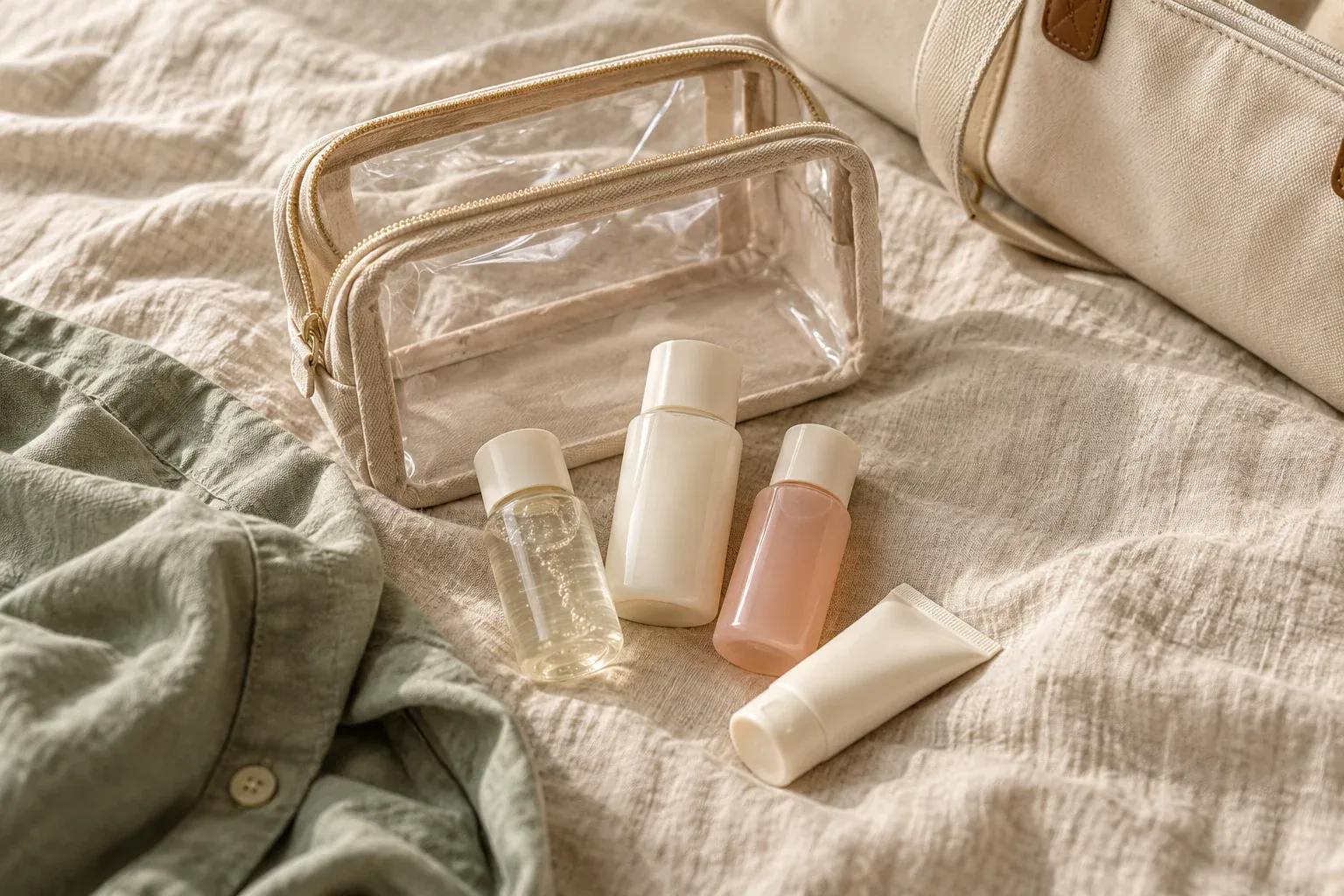
A useful travel skincare packing list starts with cleanser, moisturizer, sunscreen, and makeup remover if you need it. Bring prescribed skincare as directed, then add only the optional products you expect to use. Check container sizes and airport rules before fitting everything into your bag.
The aim is a familiar routine you can manage at a small hotel sink. A weekend away doesn’t have to come with a miniature version of every bottle on your shelf.
Pack by routine, not by bottle size
Write your morning and evening steps before choosing travel containers. A tiny bottle is only useful if you need what’s inside it.
For a simple morning, plan cleansing as appropriate for your usual routine, moisturizer if you use it, and sunscreen. At night, plan removal of makeup and sunscreen, followed by moisturizer. Keep any prescribed products on their directed schedule.
You may use the same cleanser and moisturizer at both ends of the day. Count those once. A toner, cosmetic serum, mask, and separate facial oil are optional packing decisions, not gaps you need to fill.
The simple morning routine and evening routine are useful starting points if your list is getting longer than your trip.
Your travel skincare packing checklist
Choose quantities for the length of the trip and your actual usage. A small container that runs out halfway through is less helpful than one slightly larger bottle you know will last.
| Item | Bring it when | Packing check |
|---|---|---|
| Your usual cleanser | It is part of your regular routine | Cap closes securely; enough for morning and evening use as needed |
| Moisturizer | You use one at home | Familiar formula in suitable packaging |
| Sunscreen | For daytime sun protection | In date, enough for directed application and reapplication |
| Makeup remover | Your usual cleanser doesn’t remove what you wear | Pack alongside any pads or cloth you need |
| Prescribed skincare | It is part of your care plan | Original directions and any travel documentation needed |
| Optional toner, serum, or gel | You want to keep that step | One familiar choice rather than several new samples |
| Small practical extras | You use them regularly | Hair tie, clean cloth, lip product, or clean applicator |
Keep this as a packing prompt, not a shopping list. Cross out anything that doesn’t belong in your routine. If you don’t normally use a mask at home, a flight isn’t a reason to buy one.
Check carry-on liquid rules for the whole journey
For U.S. checkpoints, the TSA’s travel guidance limits ordinary carry-on liquids, aerosols, gels, creams, and pastes to containers of 3.4 fl oz (100 mL) or less, fitting in one quart-sized bag per passenger. The size of the container matters, so a half-empty 150 mL bottle doesn’t meet the standard limit.
Rules and screening arrangements can differ by airport. Check the official guidance for departure, connections, and the return journey, even if you remember different rules from your last trip. Medication has separate provisions; check those directly rather than applying the ordinary toiletries rule to your prescriptions.
Put the liquids bag where you can reach it without unpacking clothing. Try closing it at home with everything inside, including toothpaste and other toiletries that share the allowance. A bag that only closes when you leave the sunscreen out needs a different packing plan.
Airport guidance checked October 18, 2026. Recheck before traveling.
Keep packaging useful, not just matching
Original travel-size packaging keeps the product name and directions with the formula. It can also be easier to recognize in a dim bathroom than a row of identical refillable bottles.
If you’re considering decanting, first check whether the manufacturer allows it and whether the container is suitable. Keep sunscreen and prescribed products in their original packaging unless the manufacturer or pharmacist advises otherwise. Don’t assume a decorative pot is suitable for every formula.
For a product that can be transferred, use a clean, fully dry container, identify the contents, and keep the original instructions available. Avoid topping up unknown leftovers. Save a photo of the original label so you can check directions without bringing the carton.
Packing similar-looking products? Give each a clear name rather than relying on the color of the cap. “Cleanser” is useful when you’re tired. “Bottle 2” is less useful after a long journey.
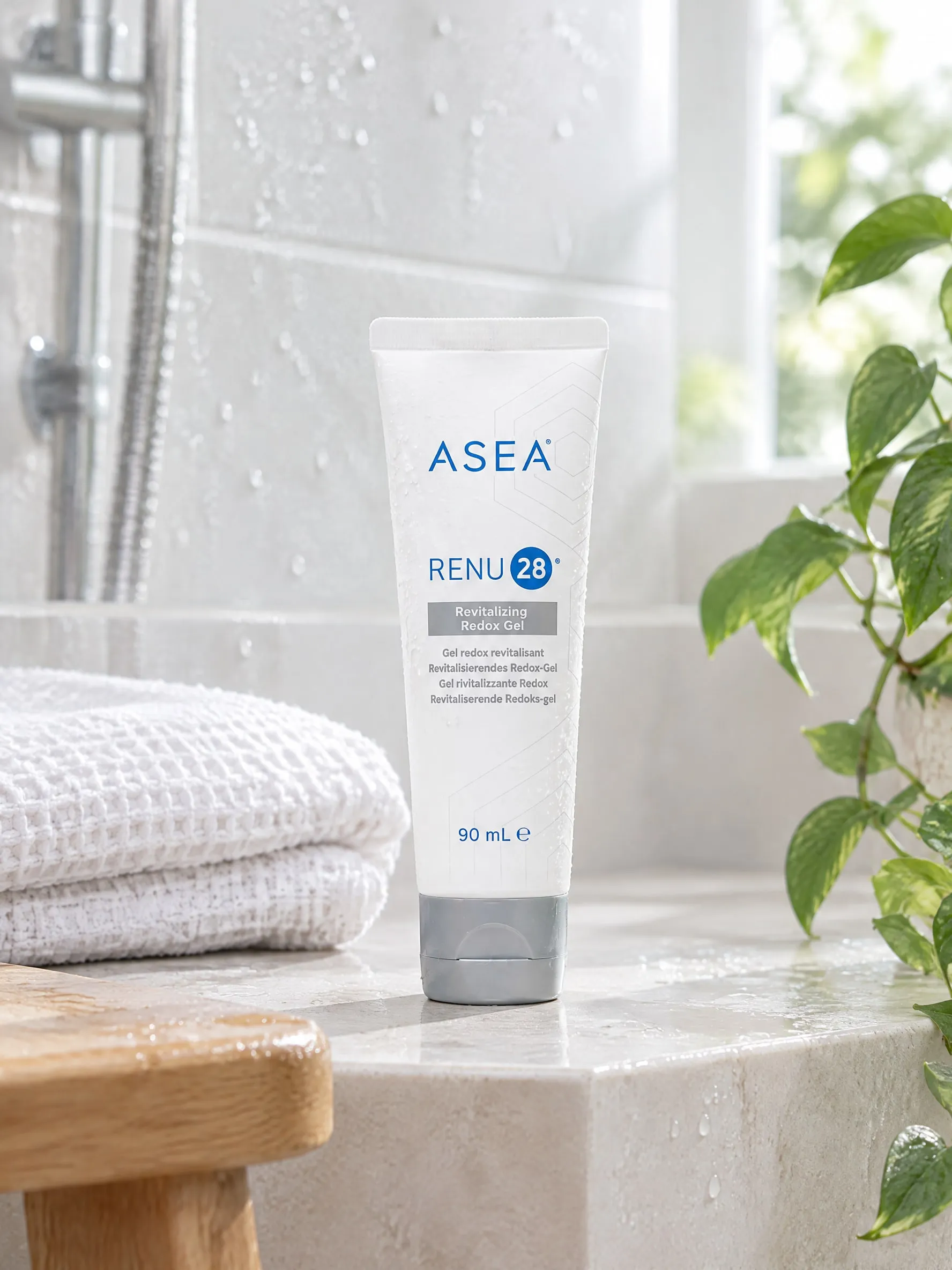
If RENU 28 is already an optional step in your routine, check the size printed on your own tube and include it with your gels. You can review its place in the sequence in the RENU 28 guide. It doesn’t replace your moisturizer or sunscreen, so adding it shouldn’t displace either essential you intended to pack.
Plan sunscreen separately from your facial routine
Think about the skin you’ll have uncovered and how much time you’ll spend outdoors, rather than packing only for your face. A walking holiday, beach afternoon, and mostly indoor work trip can call for different amounts in the bag.
The American Academy of Dermatology recommends broad-spectrum, water-resistant SPF 30 or higher. Follow the sunscreen label for application and reapplication, and include shade and sun-protective clothing in your plans.
Don’t stretch a small bottle by applying less. If carry-on space won’t hold enough, plan a suitable larger supply in checked luggage or a reliable purchase at your destination. Make that decision before you arrive, especially if you rely on a particular formula.
Do a trial pack before departure
Put the planned products in your toiletry bag and use that selection at home for an evening and the following morning. You’ll quickly notice the missing hair tie, the pump that won’t lock, or the makeup remover that needs pads you forgot to pack.
This is a practical rehearsal, not a reason to start new products. Check whether you can find each item easily and whether the same selection works for both routines. Close everything afterward and inspect the bag for leaks.
For a longer trip, don’t guess that a sample sachet will last a week. Watch how much you normally use, bring a sensible allowance, and make a refill or purchase plan where needed. Keep a small note of what ran short on previous trips so next time’s packing is easier.
Unpack only what you need
At your destination, choose a dry spot away from direct sunlight and heat, following product labels. A room shelf may be more useful than the edge of a wet sink. Keep the rest together so you can repack without hunting through drawers.
Before heading home, check the shower, bedside table, and bathroom shelf. Those are easy places to leave a single product behind when the bag already looks full.
Save your finished list for the next trip and edit it while the details are fresh. If a whole category never left the pouch, you can decide whether it earns a place next time. For an everyday version to keep beside the mirror, use the simple routine checklist.